
Weaver species list / RELATED SPECIES: Cinnamon Weaver / Golden Palm Weaver / Kilombero Weaver / Northern Brown-throated Weaver / Northern Masked Weaver / Ruvu Weaver / Southern Brown-throated Weaver / Taveta Golden Weaver / Village Weaver / Yellow-backed Weaver
IUCN: n/a Discovery: 118
Categories: golden
Discovery
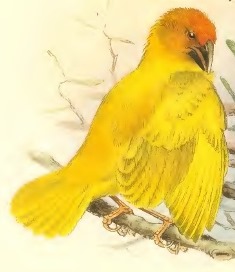
IntroductionThe Ruvu Weaver was formally described by Karel Johan Gustav Hartlaub, a German physician and ornithologist.The Ruvu Weaver was first collected by Friedrich Bohndorff, a German researcher and ornithologist. Bohndorff took part in the Austro-Hungarian Congo Expedition, 1885-87, on which he collected the type of the Bob-tailed Weaver). In 1889 Bohndorff joined as a dragoman of the Schutztruppe under Hermann von Wissmann (1853-1905) in German East Africa, due to the “Arab revolt” 1888-1890, a resistance movement against the attempt of the German East African Society (DOAG) to extend their rule over the Zanzibar coastal strip of today’s Tanzania. In 1890 Bohndorff was assigned as deck officer on the Mtoni ferry between Bagamoyo and Zanzibar Island, before returning to Berlin in 1892 (from wikipedia). It must have been during 1890 that Bohndorff collected the types of the Ruvu Weaver with other avian specimens which were passed on to Emin Pascha [Hartlaub 1891b p1] when Stanley and Emin arrived in Bagamoyo in 1890 (wikipedia). Emin sent his collections mostly to Hartlaub who described the Ruvu Weaver. However, none of the Ruvu Weaver specimens are known to be in Museum in Bremen where Hartlaub was based. Shelley 1905b gives the collection date as March, while Hartert 1919a, Turner 2011a and Lecroy 2014a give January, which is more likely from a historical point. The Ruvu Weaver was only illustrated by Shelley 1905b but there are some recent photos of males and females. (Read more in: Oschadleus HD, Andersson A, Baker NE. 2021. History and biology of the reassigned Ruvu Weaver Ploceus holoxanthus. Scopus 41(1): 1–12.) Scientific citationPloceus holoxanthus Hartlaub 1891b, Abh. Naturk. Ver. Bremen 12:22, Mtoni. Meaning of namesholoxanthus, Greek: holos, complete, entire; Gr. xanthos, yellow. First English nameBohndorff’s Golden Weaver (Shelley 1905b). Alternate namesBohndorff’s Golden Weaver. CollectorFriedrich Bohndorff. 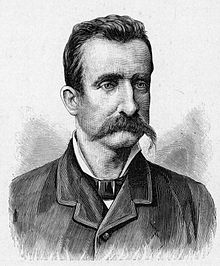 Date collectedJanuary 1890. Locality collectedMtoni, lower reaches of the Kingani R (now Ruvu River), Tanzania. Type specimensThe types are adult males in the AMNH Museum (AMNH 724738, Lecroy 2014a). |

The above is based on Weaver Wednesday 2, a weekly series about the discovery of each weaver species.
This species text first appeared as on n/a.
1. Basic biology
| Identification. The male is golden yellow with a dark eye. The female is dull coloured but has a distinctive two-toned bill colour.
Distribution. The Ruvu Weaver has been recorded on the Ruvu River up to 100 km upstream, on the lower Wami River, and from Lake Tagalala to the Rufiji River in the Selous Game Reserve. Habitat. It is a fairly common species of riverine habitats. Food. Not recorded but presumably seeds and insects. Breeding. Nests are placed in bushes, bamboos, or in Phragmites along rivers. One colony had 15 nests in a tree [new record of 4 nests in a colony]. The nest is kidney-shaped with an entrance below, and attached from the roof directly to stems. The nest appears less tightly woven and is not as smooth on the outside as in Yellow Weavers, rather resembling the nests of its closest relatives xanthopterus, bojeri and castaneiceps.
The male displays by hanging below a nest, with wings extended and flapping rapidly, tail fanned, and body swaying back and forth, while singing (ebird and notes in ML). Two eggs were measured as 19-21 x 14-15 mm. An egg from one nest was light blue with very faint mottling, and an egg from a second nest was light brown, also with very faint mottling. |
The above is based on a paper (Oschadleus HD, Andersson A, Baker NE. 2021. History and biology of the reassigned Ruvu Weaver Ploceus holoxanthus. Scopus 41(1): 1–12.) [and new ebird data as above, also here].
2. Breeding facts
| Pair bond Probably polygynous Breeding season Nest site Nest building Colony size Clutch size Egg colour Egg size Incubation Chicks and nestling period |
Breeding information based on above paper.
3. Voice
The song of the male is a series of wheezy, twangy notes.
Contact call is a “cha” note.
4. Links
eBird
Birds of the World
PHOWN records
 Vm 5911 |
 Vm 5680 |
 Vm 5186 |
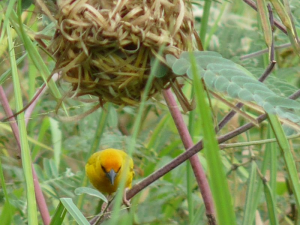
Thumb-nails of some recent PHOWN records
[page updated 29/07/2023]